
Are Sunsets the Same Everywhere?
No. A sunset takes 2 minutes at the equator and 9 minutes in Alaska, and dry desert air produces far richer color than humid coastal air. What changes and why.

Sunsets are not the same everywhere, and the differences are bigger than most people assume. Two of them are measurable rather than aesthetic: how long the sunset lasts, and how saturated the colors get. Both come down to physics you can predict before you travel.
How Long the Sun Takes to Set
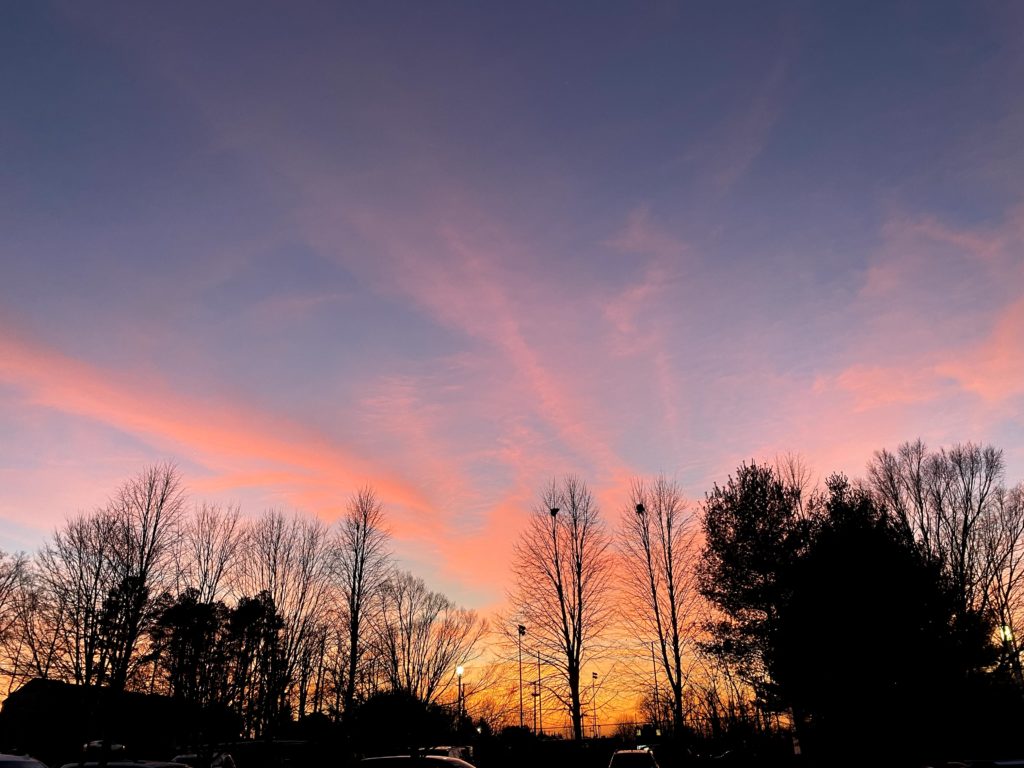
Sunset in Annapolis, MD
At the equator the sun drops straight down. Move toward the poles and its path tilts, so it slides toward the horizon at a slant and takes longer to get all the way under.
Here is how long the solar disk takes to sink from first touching the horizon to fully gone:
| Location | March equinox | June solstice | December solstice |
|---|---|---|---|
| Quito (0.2°S) | 2.1 min | 2.3 min | 2.4 min |
| Miami (25.8°N) | 2.4 min | 2.6 min | 2.7 min |
| New York (40.7°N) | 2.8 min | 3.3 min | 3.3 min |
| London (51.5°N) | 3.4 min | 4.4 min | 4.5 min |
| Anchorage (61.2°N) | 4.5 min | 8.1 min | 7.7 min |
An Anchorage summer sunset takes about three and a half times as long as an equatorial one. Anyone who has been to the tropics and felt like the sun fell out of the sky was reading it correctly.
Compare the two solstice columns and you can see a second, smaller effect underneath the latitude one. Earth is closest to the sun in early January, so the solar disk is about 3 percent wider in December than in June and takes correspondingly longer to sink. That is enough to put December ahead almost everywhere in the table, since the two solstices are otherwise near-identical outside the high latitudes. Anchorage is the exception: up there the June path is so shallow that the geometry swamps the disk size and reverses the order.
Twilight lengthens toward the poles for the same reason, and by a much bigger margin, since the sun has to sink 18 degrees below the horizon instead of half a degree. We have a separate city-by-city table of how long twilight lasts in each season.
Why Desert Sunsets Beat Coastal Ones
The single biggest control on color is how much water vapor is in the air. Less water means better color.
Sunset color comes from Rayleigh scattering: air molecules scatter short blue wavelengths out of the beam, leaving red and orange to reach you. That process needs the beam to travel through clean air. Water vapor, sea salt, dust, and pollution all scatter differently. Their particles are large compared with a wavelength of light, so they scatter every color about equally, which is the definition of gray haze. Instead of separating colors, they blend them.
This makes dry inland air the best condition for a sunset. The American Southwest, the Atacama, the high plateaus of Central Asia, and the Australian interior all deliver colors that a humid coastline rarely matches.
Ocean sunsets have a real advantage, but it is not the one usually given. The advantage is an unobstructed horizon: nothing blocks the last few degrees, so you see the whole thing and the sky has room to work. The common claim that light reflecting off the water makes ocean sunsets more colorful does not hold up. Reflection off the sea adds a glitter path toward you; it does not change the color of the sky above.
Meanwhile marine air works against you. Sea salt aerosol is hygroscopic, meaning the particles pull in water and swell as humidity climbs. Bigger particles scatter more neutrally, which is why a muggy tropical beach often produces a pale, washed-out sunset while a desert 200 miles inland is burning red the same evening.
Anyone who has read that dry desert air makes sunsets duller has it backwards, and the same logic explains why pollution does not improve sunsets either.
Altitude
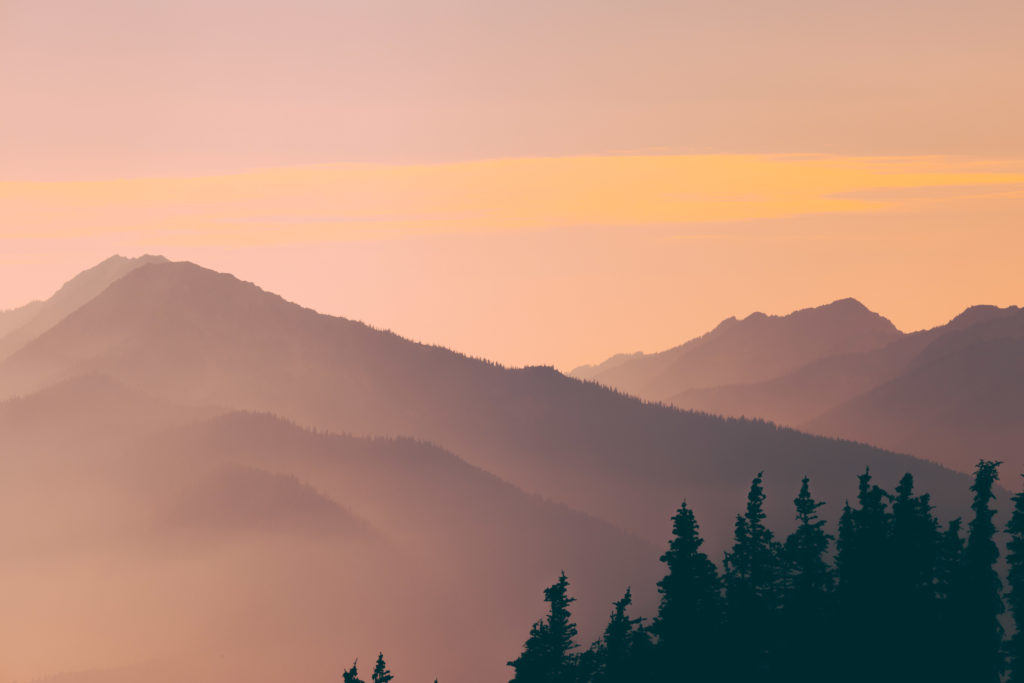
Sunset at Olympic National Park in Washington
Climbing puts you above part of the atmosphere’s densest, dirtiest layer. Above 2,000 meters you are looking through noticeably less water vapor and aerosol, and colors get cleaner and deeper. This is why high-desert sunsets are so consistently good and why observatories end up where they do.
Height also pushes sunset later, by about 5 minutes at 1,000 meters, which elevation and sunset times works through.
Clouds and Where They Sit
Clouds are the difference between a good sunset and one people photograph, but only clouds at the right altitude.
After the sun is below your horizon, it is still shining on the atmosphere above you. High and mid-level clouds, cirrus and altocumulus, catch that light from underneath and glow. Low clouds get shadowed by terrain and by the thicker air near the surface, so they usually go gray.
The other requirement is a clear gap at the western horizon. Sunlight has to reach those high clouds without being blocked by a solid deck a few hundred kilometers to your west. Solid overcast to the horizon means nothing happens, and this is why the best sunsets often follow a departing storm: high cloud overhead, clearing air, and an open western gap all at once.
Local Air, Local Weather
Regional patterns show up in the color from one evening to the next.
Wildfire smoke turns the sun deep red and can make it dim enough to look at directly, while flattening the rest of the sky to brown. The disk gets more dramatic and the sky gets worse.
Volcanic aerosol does the opposite, because it sits in the stratosphere well above the weather. After the 1991 Pinatubo eruption, sunsets worldwide picked up an unusual purple afterglow that lasted about two years.
Rain scrubs the lower atmosphere, which is why the evening after a front passes is reliably one of the better ones.
Winter air holds less moisture at every latitude, so the same location produces cleaner color in January than in July. That seasonal swing is covered in why winter sunsets look better.
What to Look For Wherever You Are
The color opposite the sunset is worth as much attention as the sunset. Turn around after the sun goes down and you can watch Earth’s own shadow rise in the east as a blue-gray band, topped by a pink arch called the Belt of Venus. It shows up almost anywhere with a clear eastern horizon and most people never notice it. Where along that horizon to look moves through the year, because the sun only rises due east about twice a year.
If you want the best odds: dry air, some elevation, high thin clouds overhead, a clear gap to the west, and the evening after a storm. If you want the longest one, go north.