
Sunset vs Dusk: The Difference and How Far Apart They Are
Dusk is not the same as sunset. It comes about 20 minutes to an hour later, when the sun is 6 degrees below the horizon. The gap by city and season, and what dusk means on a sign or in a law.

Dusk and sunset are not the same thing. Sunset is the moment the sun disappears below the horizon. Dusk comes later in the evening, after a stretch of twilight, once the sun has sunk 6 degrees below the horizon. In New York that gap is about half an hour. Near the equator it is closer to 20 minutes, and in Anchorage in December it is over an hour.
Both are instants on the clock. Twilight is the period between them, and it is where the best color usually lives.
Sunset Is a Precise Instant
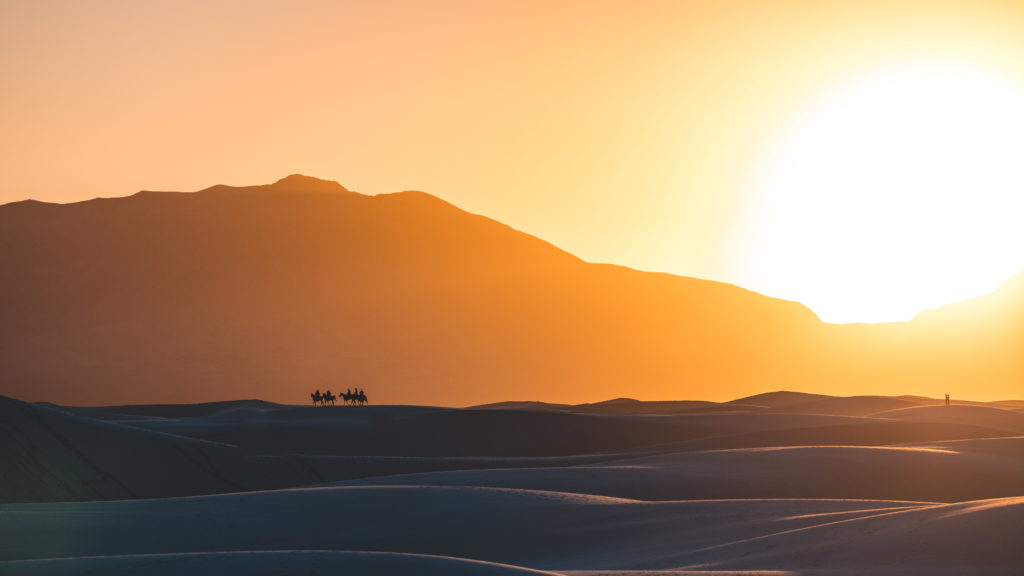
Sunset at White Sands National Park
The US Naval Observatory defines sunset as the moment the upper edge of the sun’s disk reaches the horizon. It is measured at the top of the sun rather than the middle, and it has nothing to do with when the light goes.
That definition already carries two corrections. The disk is about half a degree wide, so using the upper edge rather than the center shifts the time by about a minute. Atmospheric refraction bends the light and lifts the sun’s apparent position by roughly another half degree, so at the official instant of sunset the sun’s true center is already about 50 arcminutes below the horizon. You are looking at a sun that has geometrically already gone. The math behind that is the same math every published sunset time uses.
The disk itself takes 2 to 4 minutes to clear the horizon at most latitudes, and about 8 minutes in Anchorage in June.
Dusk Is the End of Twilight, and There Are Three
The confusion around dusk comes from the word having a technical meaning and a loose one.
Technically there are three dusks, one for the end of each phase of twilight. Each is defined by how far the center of the sun has dropped below the horizon. The times in the last column are for New York at the March equinox.
| Dusk | Sun below horizon | What it looks like | New York, March |
|---|---|---|---|
| Civil dusk | 6° | Brightest stars and planets out, color still in the west. Past this point you need artificial light to do much outside. | 27 min after sunset |
| Nautical dusk | 12° | The sea horizon fades out, which ends the window for star sights with a sextant. | 59 min after sunset |
| Astronomical dusk | 18° | The sky stops getting any light from the sun. Full night. | 92 min after sunset |
When dusk appears on its own, it means civil dusk. The National Weather Service glossary defines plain “dusk” as the same as civil dusk, and calculators that show a single dusk time usually follow it, including the sunrise and sunset calculator on this site. Our calculator labels the 18-degree point last light. That name is a convention rather than an official term.
Dictionaries are vaguer. Merriam-Webster calls dusk “the darker part of twilight especially at night” without naming an angle, and in conversation people use it for the whole dim stretch after sunset. That is fine until a source says dusk is when the sun is 18 degrees down and then also describes it as a period of fading light. Those can’t both be true.
The word comes from Old English dox, meaning dark or swarthy, by way of Middle English dosk.
How Long After Sunset Is Dusk?
There is no single number, which is why “about half an hour” gets quoted so often and is wrong so often. The gap is the length of civil twilight, and that depends on your latitude and the date.
| Location | March equinox | June solstice | December solstice |
|---|---|---|---|
| Singapore (1.4°N) | 21 min | 23 min | 23 min |
| Miami (25.8°N) | 23 min | 26 min | 25 min |
| New York (40.7°N) | 27 min | 33 min | 31 min |
| London (51.5°N) | 33 min | 48 min | 40 min |
| Anchorage (61.2°N) | 43 min | never | 62 min |
The half-hour rule of thumb works around 40 degrees latitude, which covers most of the continental US and explains why it is repeated so confidently there. It overshoots in the tropics and undershoots everywhere north of the Great Lakes.
In Anchorage in June the sun never drops 6 degrees below the horizon at all, so civil dusk doesn’t happen from about June 8 to July 4. The same is true around the June solstice anywhere north of about 60.5 degrees.
Dawn works the same way in reverse. Civil dawn comes before sunrise by about the same interval that civil dusk follows sunset.
What Time Counts as Dusk on a Sign or in a Law?
Laws mostly avoid the word. US headlight rules are a good example. Michigan’s vehicle code requires lights “from a half hour after sunset to a half hour before sunrise,” and several other states use the same wording. Half an hour after sunset lands close to civil dusk across most of the US, so the law and the astronomy roughly agree, but the law counts minutes from sunset rather than degrees.
A park sign that says it closes at dusk usually doesn’t define the term at all. If a ticket depends on it, the local ordinance is where the real definition lives. Otherwise, civil dusk is the reading that matches the weather service and most calculators.
What Happens in Between
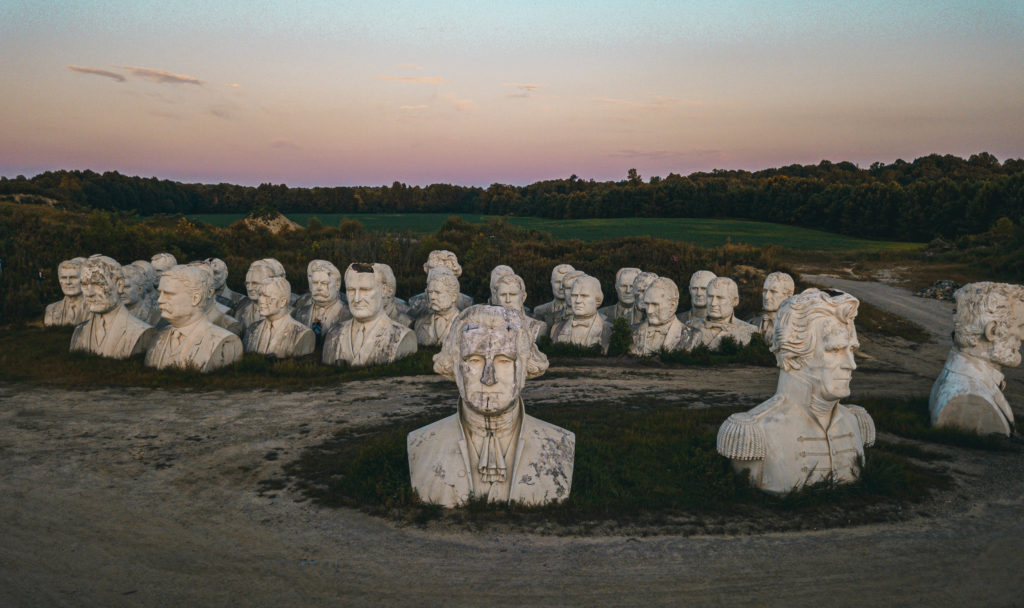
Dusk in Virginia
The twilight between sunset and civil dusk is where the sky does its best work, and it is a different show from the sunset itself.
At sunset the color comes from the direct beam: sunlight that has taken a long slanted path through the atmosphere, losing its blue to Rayleigh scattering, arriving red. After the sun is down, the direct beam is gone and you are seeing light scattered off the upper atmosphere instead. High clouds catch it from underneath and light up, often more strongly than they did before the sun went down.
Turn around during this window and you can watch Earth’s shadow rise in the east as a dark blue-gray band, with a pink arch called the Belt of Venus sitting on top of it. On a clear evening it is the most reliable thing in the sky and most people never look for it.
Toward civil dusk the sky settles into blue hour, when the remaining light is dominated by short wavelengths scattered from high overhead. Photographers plan around it because artificial lights and the sky reach similar brightness, so a city can be exposed in a single frame.
So Which Is Better?
Sunset has the drama. Dusk has the odds.
A sunset needs the sun to actually be visible at the horizon, and a bank of cloud a hundred kilometers to your west will end it before it starts. Plenty of evenings the sun just fades into gray a few degrees up and nothing happens.
The twilight afterward is more forgiving, because it doesn’t need a clear line of sight to the sun. It needs light reaching clouds above you, and those clouds can be lit from below by a sun you cannot see. This is why evenings that look like a write-off at 6:00 sometimes turn spectacular at 6:20.
So don’t choose. Most people watch the sun go down and leave, which means they leave right before the part with the best chance of being worth it. Give it 20 more minutes.
Find a spot with an open horizon, ideally west and east both, and check when civil twilight ends where you are so you know how long you have.
Frequently Asked Questions
Is dusk the same as sunset?
No. Sunset is the moment the sun’s upper edge drops below the horizon. Dusk is the end of twilight, which happens later, and by default means civil dusk with the sun 6 degrees below the horizon. At 40 degrees north they are about 27 to 33 minutes apart depending on the season.
Is dusk at sunrise or sunset?
Sunset. Dusk is an evening event that comes after the sun goes down. The morning counterpart is dawn, which comes before sunrise. Both come in three versions: civil at 6 degrees, nautical at 12, and astronomical at 18.
What does dusk mean in time?
On a clock, dusk is a single timestamp rather than a stretch of the evening. If an app, almanac, or calculator shows one time labeled dusk, it is almost always civil dusk: the instant the sun reaches 6 degrees below the horizon and outdoor light stops being usable.
What is 30 minutes before sunset called?
It has no formal name. That stretch falls inside golden hour, which in the evening runs from when the sun is 6 degrees above the horizon until it is 4 degrees below. In New York in March, the sun crosses 6 degrees about 36 minutes before sunset.
What is the difference between twilight and dusk?
Twilight is the period, and dusk is the instant that ends it. Evening twilight starts at sunset and runs through the civil, nautical, and astronomical phases, and each of those phases finishes at its own dusk.
Does dusk mean it is dark?
Not at civil dusk, which is the one people usually mean. At that point the brightest stars are out but the western sky still carries color and you can see where you are going. True darkness starts at astronomical dusk, which comes 50 minutes to two hours after civil dusk in most places. North of about 48.5 degrees around the June solstice, which takes in London, Amsterdam, and Vancouver, it never gets there at all, and the sky stays faintly lit all night.